
This mid-term review is very inspiring.
It is both symbolic—so much progress has been made since the initial idea—and very concrete, as we are already receiving valuable findings and testimonials.
For the Jacques Martel Foundation, this mid-term review is very encouraging.
There was the transatlantic crossing project, the desire to take advantage of this journey to shine a spotlight on the ocean and its fragility, the meeting with Surfrider Foundation Europe, the immediate commitment to the project, the crazy ideas… not so crazy after all, and the commitment, first human, then financial, which continues to grow (👋 26 days left).
And the next steps, which continue to mobilise all those involved. As a reminder:
🌱 The crew will take part in a waste collection event organised by the local Surfrider Foundation Europe team on a beach in Guadeloupe on 23 December 2025.
🎥 Once edited, the crew will have the immense pleasure of presenting Surfrider with a film documenting the state of the ocean between the Canary Islands and the Caribbean.
At this point, what does the crew have to tell us?
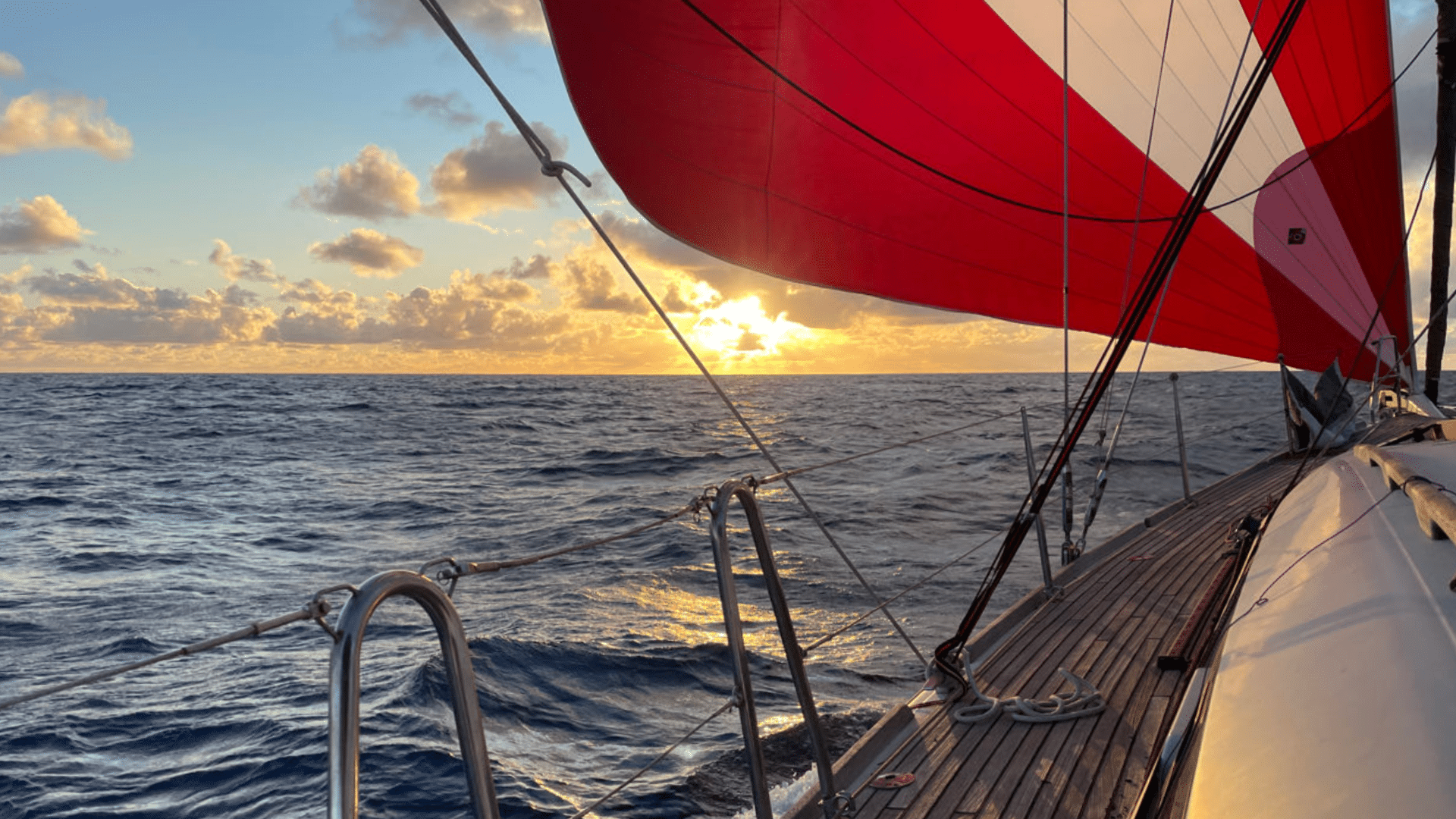
First, a surprise: very little traffic on the route; not a single container ship had been sighted so far!
Then, constant wonder: lots of cetaceans at the start of the crossing, replaced by numerous flying fish, which sometimes washed up on the deck, but also a beautiful diversity of fish (marlins, sea bream, tuna, etc.) to the delight of the fishermen.
Phosphorescent plankton and large fluorescent jellyfish also enlivened the night watches.
The only concern at the moment is sargassum!
The crew encountered it right from the start, when they were expecting to see it as they approached Saint Lucia. Of course, we think of container ships, which carry these invasive species attached to their hulls as they criss-cross the globe…
As a reminder, sargassum is a disaster for the Caribbean because they run aground up on beaches, sometimes several metres thick, and can release toxic gases as it decomposes. At sea, it complicates navigation and suffocates coastal ecosystems, particularly corals.
However, there is no plastic pollution visible to the naked eye (no drift nets, no buoys, etc.). This does not mean that microplastics are absent; they are invisible and continue to pollute marine ecosystems silently.
So, halfway through the journey, the crew reminds us that the ocean remains a place of beauty, mystery and profound fragility: all the more reason to continue our commitment to protecting it, together.
* Project of general interest as part of the Jacques Martel Foundation’s ‘protection of marine resources’ mission.