

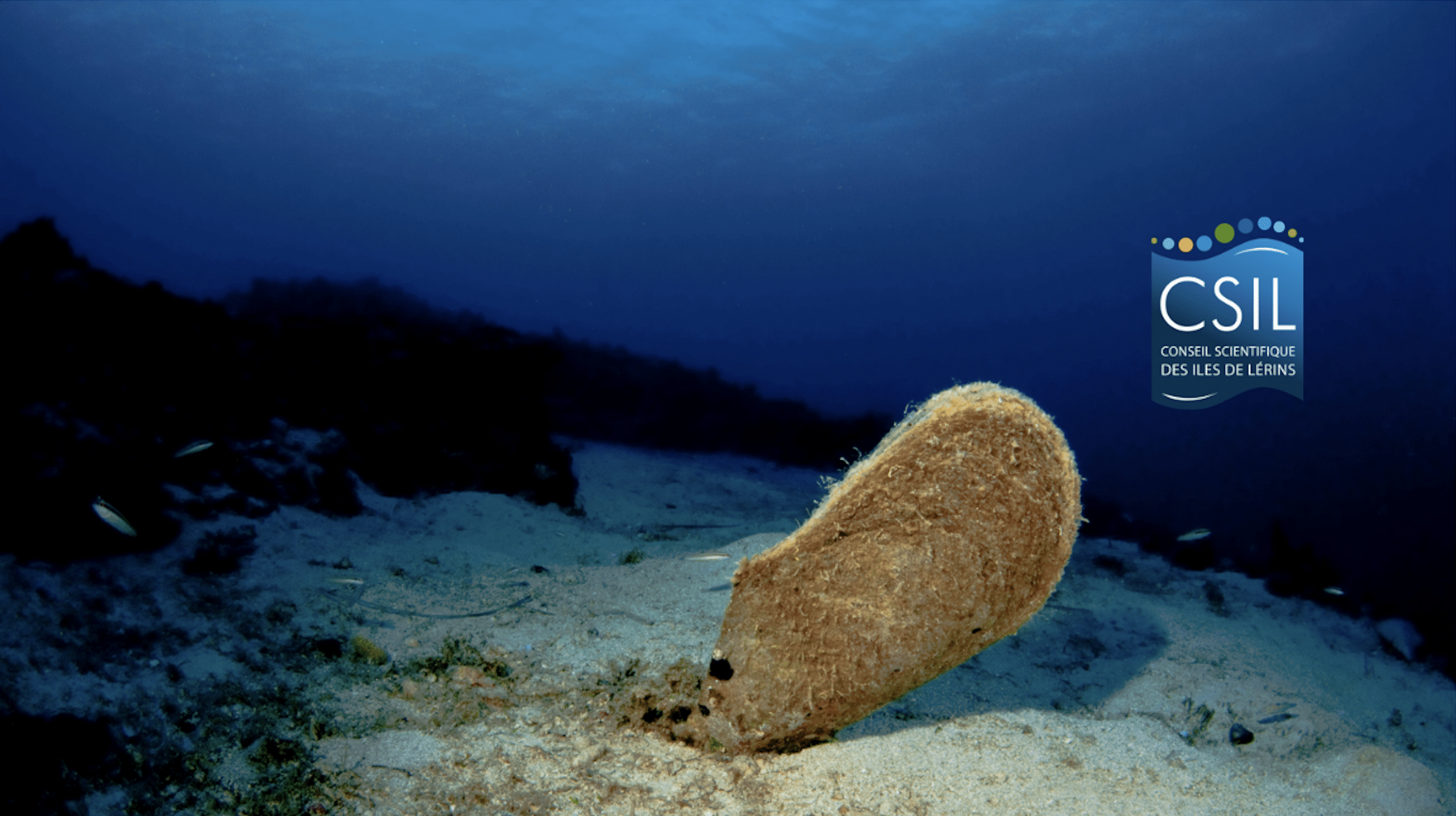
An iconic species of the Mediterranean, Pinna nobilis, better known as the noble sea fan, plays a vital ecological role.
Buried in Posidonia seagrass beds, it helps to stabilise sediments, improve water quality through its filtering capacity, and create microhabitats used by numerous organisms (sponges, crustaceans, juvenile fish).
Unfortunately, since 2016, a parasite has caused episodes of mass mortality. The species was classified as critically endangered by the IUCN (International Union for Conservation of Nature) in 2019. Today, only a few so-called ‘refuge’ populations remain, notably in the Thau Lake. Scientific observations suggest that certain populations in the Thau Lake show increased tolerance to the parasite. The project aims to analyse the genome of these individuals in order to identify the genetic markers potentially associated with this resistance.
The project, proposed and led by the CSIL (Scientific Council of the Lérins Islands), aims to use this knowledge to identify resistant individuals through sequencing, and then to apply this information to a program for the conservation and reintroduction of resistant individuals into the Bay of Cannes. We are delighted to be able to support this project.
What is the state of the project today?
In total, biopsies have been taken from 200 individuals. The sequencing phase has been completed and the genetic analysis is currently being finalized. Further biopsies will be taken this summer to determine the extent to which a target population carries the gene or not.
In the spring, the teams will also focus on survey operations to map the most suitable sites for future transplants in the Bay of Cannes. Several criteria will be assessed, including currents, depth and human impact.
The translocation is planned for December. The team prefers cold water, in which pathogens are less active. The scientific monitoring phase of the reintroduced individuals will then begin.
We will be lucky enough to take part to these operations and will therefore be able to share these rare moments with you: seeing an endemic species gradually reclaim its place in its natural environment.